Seasonal Sunlight Shifts: How Stained Glass Art Evolves from Spring to Winter
Understanding low winter sun angles vs. high summer sun arcs on your window artwork.
Key Takeaways
- Best light: A suncatcher glows brightest in a window that catches direct or lightly-diffused sun for part of the day.
- Placement: Hang at eye level, centred in the pane and opposite a pale wall, for a moving mural of light.
- Room impact: The right piece in the right window is the cheapest way to transform how a whole room feels.
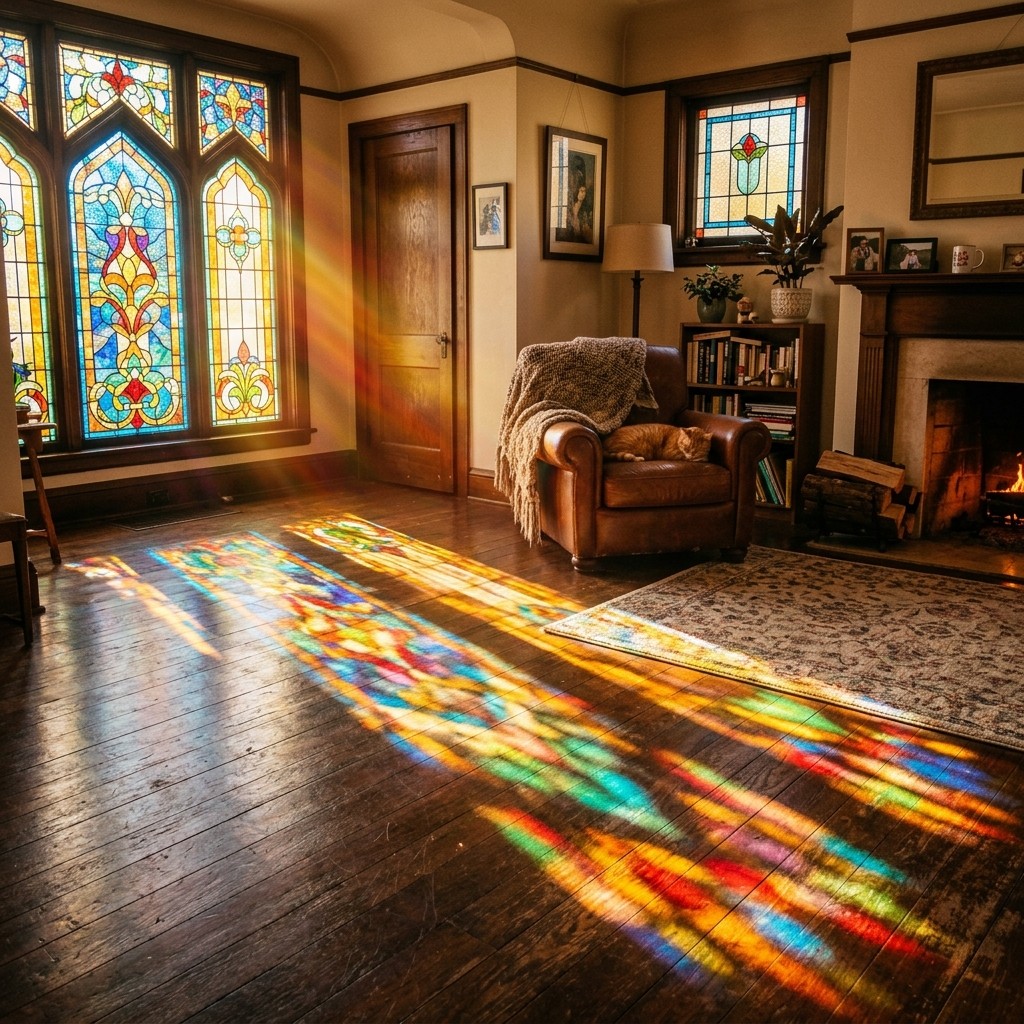
- Colour in motion: As the sun moves it casts shifting pools of colour across floors, walls and plants — never the same twice.
In winter, low sun angles shoot light deep into interior room corners. In summer, steep overhead sun creates concentrated light pools near the window sill.
A closer look
Few things transform a room like light moving through genuine cathedral glass. Below, we walk you through everything worth knowing about suncatcher — the materials, the meaning, and how to get the most from it at home.
Choosing the right window
For the richest effect, hang your suncatcher where direct or lightly-diffused sun reaches the glass for part of the day. A sheer curtain behind it softens harsh glare while keeping the colour. Avoid deep shade, where cathedral glass reads flat, and give the piece a clear line to the sky rather than a wall or fence a few feet away.
Reading the room
Think about where the projected colour will land. Placed opposite a pale wall or a light hardwood floor, a suncatcher paints a moving mural through the day. Above a reading nook, a plant shelf, or a kitchen sink, it turns an everyday spot into the best seat in the house — a small, daily moment of calm that no printed poster can match.
“Real stained glass isn't decoration you look at — it's light you live with.”
— LuzyGlassArt Studio
Scale, height, and balance
Size the piece to its window: a small suncatcher can feel lost in a large picture window, while an oversized panel overwhelms a narrow pane. Hang it roughly at eye level or a little above, centred in the glass, so the colour reads cleanly and the solder lines frame the view beyond rather than fighting it.
How light brings the glass alive
A suncatcher in genuine Spectrum or Wissmach cathedral glass is designed to be read by the sun. As daylight passes through the mineral-tinted sheets, it bends and scatters — throwing pools of colour across your floors, walls, and houseplants that shift hour by hour. North light gives a calm, even glow; east windows deliver bright morning colour; south light is the most brilliant; and a west window sets the suncatcher ablaze at sunset.
Bring one home
Ready to bring one home? Explore our handcrafted suncatcher designs, or tell us what you have in mind and we'll create a one-of-a-kind commission just for you. Our Shipping & Returns policy covers a piece that arrives damaged.